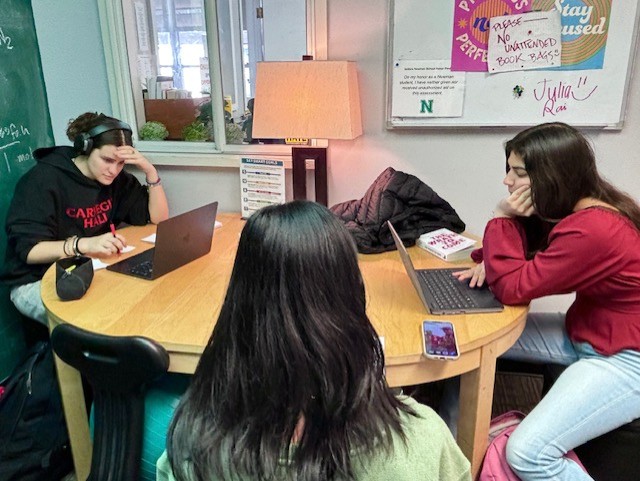
“Senioritis” is a common name for a phenomenon many people experience: burnout. While many blame second semester seniors for laziness or a lack of responsibility, the true cause is often burnout. The stress of junior year, intensity of college applications, and juggling act of all the other activities most high schoolers participate in is a precarious balance. Burnout happens once that balancing act becomes too much.
It is easy to ask “How do I avoid burnout?” The better question is more likely “How do I deal with burnout?” Burnout is almost inevitable because everyone has their limit. It is not something to push through; instead, embrace it.
Embracing burnout looks like accepting exhaustion as a signal to pause and slow down (at least, as much as possible). Burnout is a chance to reset: change your routine, create time for yourself, and redefine your boundaries.
The most important part of recovering from burnout is first recognizing that you are in a state of burnout. This recognition comes from noticing your own exhaustion, lack of energy, and limited motivation.
Self-care and rest is important to build up the ability to stay resilient through future stressors that could cause additional burnout. It is important to take time for yourself, discover different meditation tactics, exercise, get outside, fuel your body, reflect through journaling, take a break from social media, or develop a new personal routine.
It is easy for us to tell you to deal with burnout. Just remember that you have support systems in place, whether that is your family, friends, advisors, or counselors.
If you are struggling with burnout, you are not alone. It is not a sign of weakness, but a chance to reinvigorate yourself. If you are working through burnout as a senior, just remember that your next chapter is right around the corner!
n/ is a new Senior Advice column on the Navigator. If you have a specific question, email either of the Senior Editor-in-Chiefs (Morgan Breaux and Tripp deLaureal).