History of Jazz is maybe the most unique class Newman has to offer these days. What other class consists of listening to vinyl, singing spirituals, and learning traditional dances? It’s been an unforgettable experience overall, but the highlight for me and most of my classmates has definitely been the three field trips we went on with Ms. Desiree Edwards from the Louis Armstrong Foundation. So for anyone who’s interested in taking the class in the future, here’s a recap of those field trips!
Field Trip #1: Congo Square
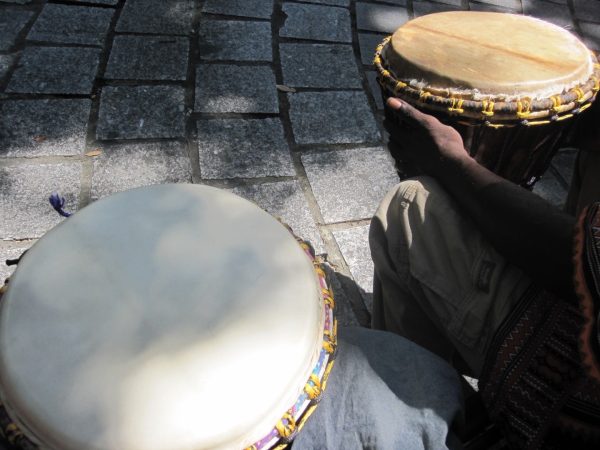
Our first field trip took us to Congo Square, New Orleans’ center of community in the city’s early days. Every Sunday, there would be a market in Congo Square where people from all backgrounds could come together, complete with booths run by enslaved people hoping to buy their freedom and African tribal dance competitions. When we went to Congo Square, we participated in a dance lesson/drumming circle where we learned some authentic dances while our classmates beat the rhythm on drums and bongos. This was a super fun way to both show off our dancing and drumming skills while interacting with the cultural events we had learned about. Next, we learned about the culture of the Mardi Gras Indians and got to participate in a march where we roleplayed as spyboy, flagboy, and Big Chief.
Field Trip #2: Spirituals and the Opera
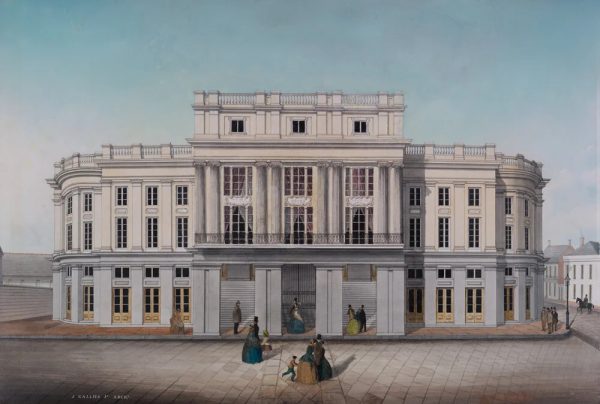
For our second field trip, we focused on two distinct forms of New Orleans music that influenced jazz in its early days: spirituals and opera music. First, we returned to Louis Armstrong Park, where Congo Square is located, and stood near the Mahalia Jackson statue in front of the theater named after her. Mahalia Jackson was one of the most popular religious singers of her time, who always made sure to represent her Christian values and her New Orleans upbringing in her music. Ms. Edwards sang a few of Mahalia Jackson’s songs, like “How I Got Over,” to demonstrate the power of her voice and music on her listeners. Next, we walked to the Sheraton Hotel, which stands on the site of the French Opera House, the most important opera venue in New Orleans in the late 19th and early 20th centuries. There, we listened to a singer from OperaCreole discuss the importance of opera to the culture of the city during that time and sing a song written by Edmond Dédé, a popular Black composer of the late 1800s.
Field Trip #3: Preservation Hall
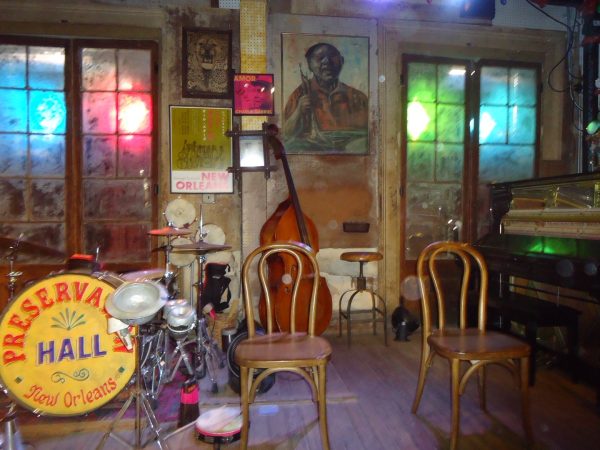
On our third and final field trip, we travelled to the world-famous Preservation Hall in the heart of the French Quarter. There, we first listened to a solo pianist demonstrate the evolution from ragtime to jazz by playing songs written by Jelly Roll Morton, a pioneer of early jazz, such as his famous piece “Maple Leaf Rag.” Then, Ms. Edwards introduced the Preservation Hall Band, who treated us to their interpretations of well-known songs like “When The Saints Go Marching In,” “You Are My Sunshine,” and “It’s Been A Long, Long Time.” In many of their songs, each instrument would perform an improvised solo before the band jumped back in to continue the song, which really showed their musical connection and impressed all of us. Because we were so close up to the band and interacted with them throughout, it was definitely one of the most exciting musical performances we had ever been to.
Thanks to Mr. Causey and Ms. Edwards for sharing these incredible experiences with us!