Do you hear the people sing?
Singing a song of angry men?
It is the music of a people
Who will not be slaves again!

The iconic chorus of “Do You Hear the People Sing?” from the musical Les Misérables has long been used as a pro-democracy rallying cry in various protests throughout the world. The song is frequently translated into local languages, like in 2019 in Hong Kong when demonstrators sang it in Cantonese in protest against a controversial extradition bill. The pattern continued in Thailand, Myanmar, and South Korea before making its way to the United States in 2025.
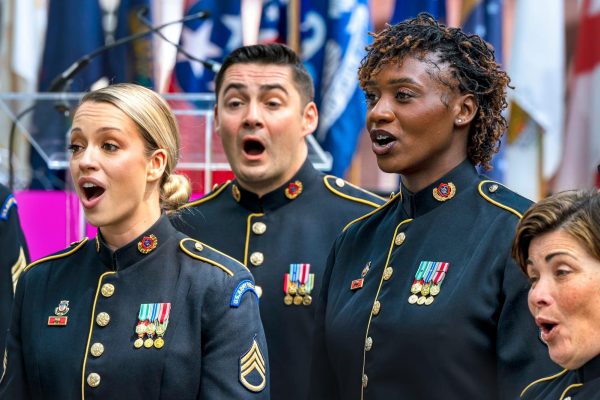
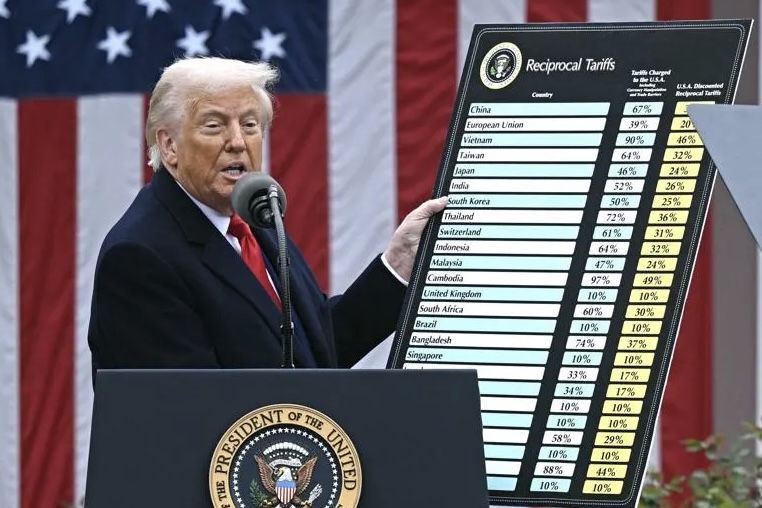
At the Governor’s ball on February 22, 2025, the U.S. Army Chorus sang “Do You Hear the People Sing?” in front of President Donald Trump and first lady Melania Trump, alongside other United States politicians. The song was quickly interpreted to be a protest against President Trump’s administration. Earlier in the week, President Trump declared himself “the king” of the United States in his social media post depicting a fictionalized Time magazine cover.
Despite speculation, it is unlikely that the song was intended as a demonstration against President Trump. In fact, he frequently utilized the song throughout his two presidential campaigns. During his first campaign for candidacy in 2016, he played the song at an on-stage event in Miami. Later, he played the song before announcing his 2024 candidacy. The creators of the musical released a statement condemning the use of the song at political events, emphasizing they did not grant Trump prior authorization for the song’s use. Nonetheless, the U.S. Army Choir singing the song at President Trump instead of for President Trump demands a certain degree of irony.
The sentiment of resistance against a monarchical presidency has spread throughout the United States. Amidst attempts at redistricting, the continuing government shutdown, and the executive branch amassing power, Americans are responding in local elections. The Democratic Party has swept the most recent major elections following President Donald Trump’s reelection. In New York City, democratic socialist Zohran Mamdani claimed victory over former governor and Democrat Andrew Cuomo, who ran as an independent. Democrat Mikie Sherrill became the second female governor of New Jersey, defeating Republican opponent Jack Ciattarelli by a wide margin. Finally, in Virginia, Democrat Abigail Spanberger defeated Republican Winsome Earle-Sears, becoming the first woman to govern the state and flipping the office.
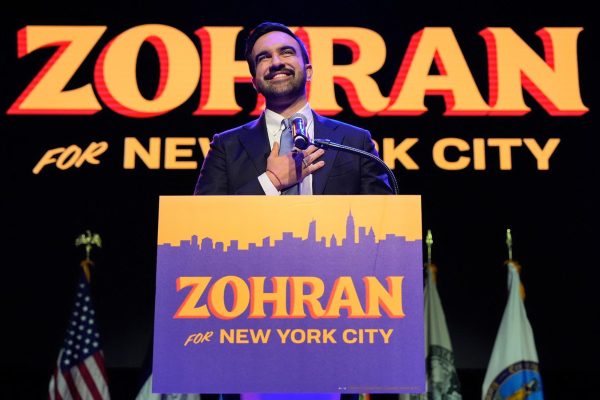
Zohran Mamdani is New York City’s first Muslim and first South Asian mayor. He was born in Uganda but moved to the United States when he was seven. His fresh perspective, emphasized by his youth and his campaign’s focus on hope, has energized progressives. His complex set of identities: Indian, African, and American, are truly representative of the United States as a melting pot of multiculturalism. Mamdani’s campaign focuses on the hope for a better New York, emphasizing a plan to increase safety and affordability for New York residents. Mamdani’s campaign leaned on social media to connect with younger voters. On election day on Tuesday, content creators from New York City turned to social media apps to spread the message for others to vote for Mamdani for mayor. Additionally, residents of other states emphasized how they wished they could live in New York so they could have the opportunity to vote for Mamdani and be part of this historic election. With promises of rent stabilization, lower costs for groceries, free buses, and a litany of other promises, Mamdani has a long list of real problems that real working class people face daily to tackle during his time in office.
One of the most interesting aspects of New York City’s mayoral race was the voting system. New York City utilizes Ranked Choice Voting in local elections, a system in which voters can rank multiple candidates in order of preference rather than the traditional plurality voting system, in which voters select one candidate. The Ranked Choice Voting system ensures the final decision is supported by the majority. The message spread by Mamdani and his supporters was “Don’t rank Cuomo,” who was Mamdani’s biggest opponent in the democratic primaries and the mayoral election.
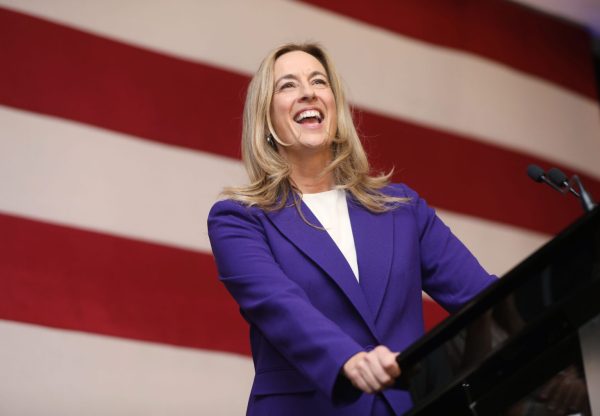
November 4, 2025 (Amanda Brown)
In New Jersey’s gubernatorial election, turnout was close to 50% of the state’s population, and they exceeded the three million voter threshold for the first time in history. Mikie Sherrill made her anti-Trump message the cornerstone of her campgain, reminding voters of Trump’s termination of Gateway, the $16 billion dollar project to construct a rail tunnel between New York and New Jersey. Sherrill reminded voters of the vitality of the project and the importance of continuing the project. She applied this anti-Trump message to her opponent, who was endorsed by Trump. Ultimately, both candidates relied on their backgrounds and resumes to pad their campaigns, with Mikie Sherill leaning into her history of Navy service and Jack Ciattarelli returning to his roots as a third-generation Italian American and New Jersey identity.
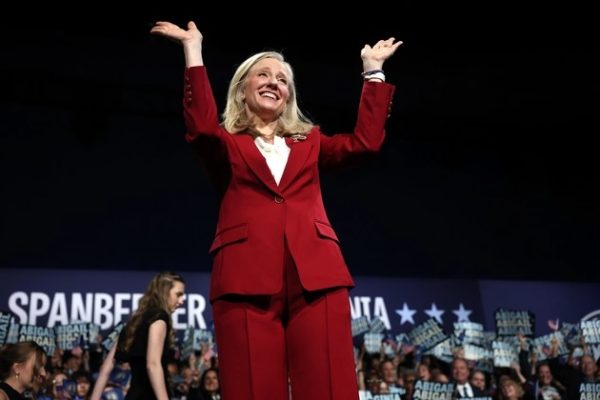
In Virginia’s gubernatorial election, Abigail Spanberger centered her campaign on social issues, including economic and affordability issues, public safety, and support for abortion rights. Spanberger hopes to support every Virginian, uniting despite partisan conflicts for the better of the Virginian Commonwealth. Similarly to Mikie Sherrill, Spanberger had a decisively anti-Trump message throughout her campaign, despite running as a moderate. She emphasized how unemployment created by cuts from the Department of Government Efficiency and furloughs following the government shutdown were disproportionately affecting Virginia, the home to many federal employees. Endorsements from powerful Democrats and potential 2028 democratic presidential candidates emphasized this message. Spanberger faced unique challenges, including redistricting attempts by Virginian lawmakers.
These most recent elections demonstrate the general public opinion: politicians should focus on their constituency, not themselves. Each candidate elected in these three most recent elections focused on how their platform would help their local citizens, despite partisanship and political challenges nationally. “We the people of the United States” want the government to work with the people to ensure “liberty and justice for all.”
It is clear “Do You Hear the People Sing?” is a popular protest song, but students participating in Speech and Debate enjoy putting their own creative spin on tackling social issues. Some of the most powerful pieces are those presented in the events of Dramatic Interpretation, Original Oratory, and Program Oral Interpretation. The final round of the National Speech and Debate tournament is a significant platform for students. Over 6,000 students compete in the tournament each year. Around 500 students, coaches, and judges pack into whatever local convention center is being used for the tournament to spectate final rounds. And finally, the event is streamed live online, probably reaching tens of thousands of additional viewers, and these videos are permanently archived on the National Speech and Debate Association’s website.
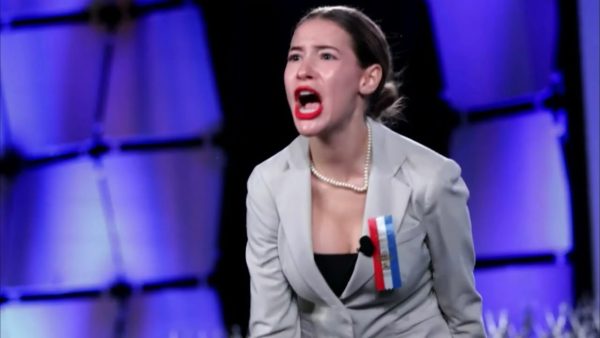
In 2023, Isabella Royer performed an impactful Program Oral Interpretation titled “Can You Hear the Screams Now,” a powerful piece of commentary on gun violence across America, dedicated to the victims of the Uvalde school shootings in Texas. With this piece, she claimed victory at the 2023 National Speech and Debate Championships, and she continued her success in 2024 as the runner-up. Now, this piece is widely known in the Speech and Debate community.
Many students from Louisiana have achieved similar success and recognition at the national level. Two students from David Thibodaux STEM Magnet were back-to-back National Champions in Informative Speaking. Their most recent champion in 2025 educated the audience on black colorism, even calling out the NSDA for the harsh lighting used on the national stage which illuminated competitor’s suits better than their faces. DTSM has had final round appearances in Original Oratory and Dramatic Interpretation, each piece poignant and passionate. In Speech and Debate, challenging higher authorities has become part of the formula for success. Competitors are lauded for educating the audience on social issues and providing frameworks to tackle problems, and this expectation has a lasting impact on viewers, coaches, and judges alike. Spectators walk into final rounds, expecting high quality speeches and striking pieces of social commentary that encourage reflection and introspection.
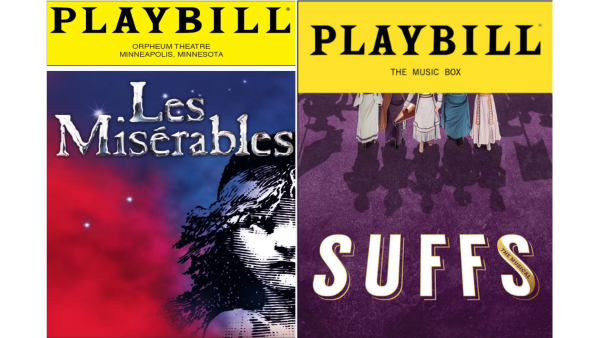
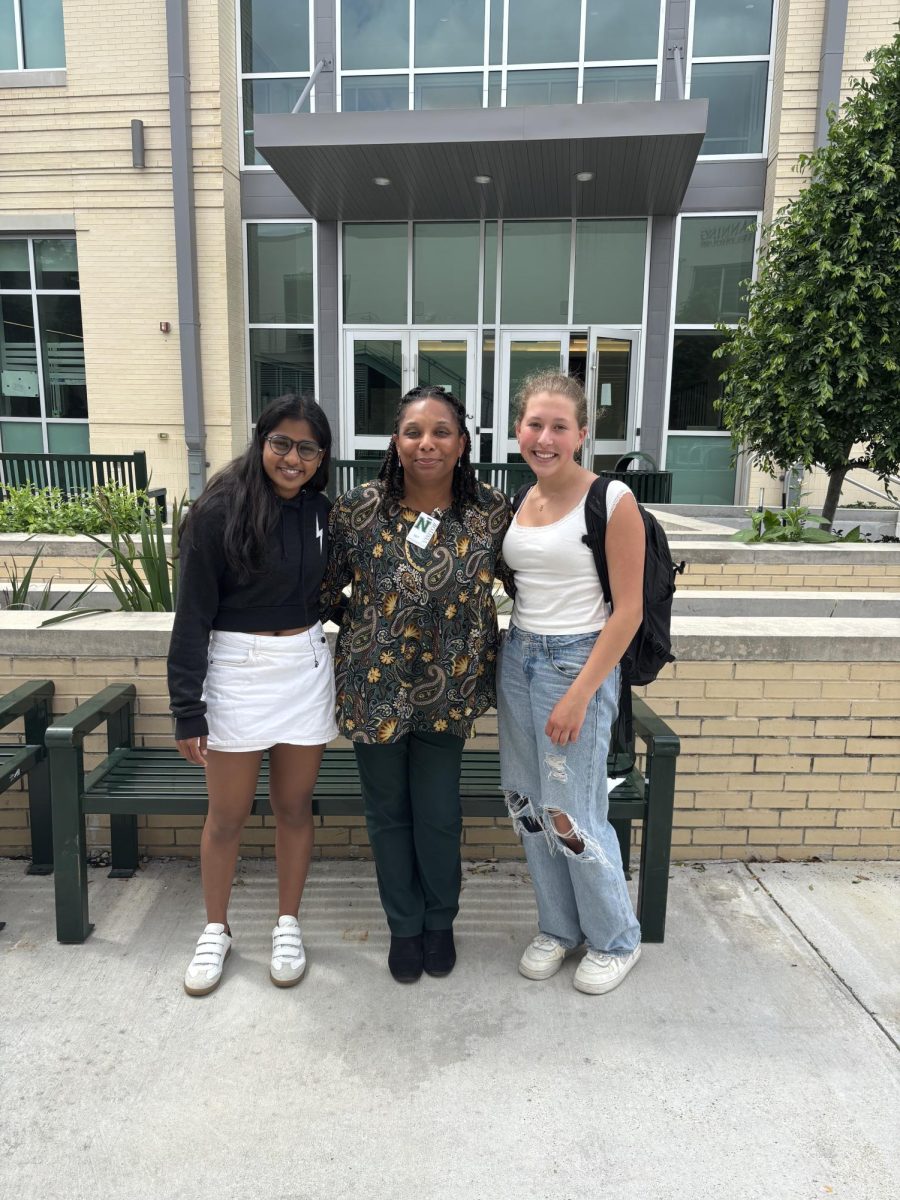
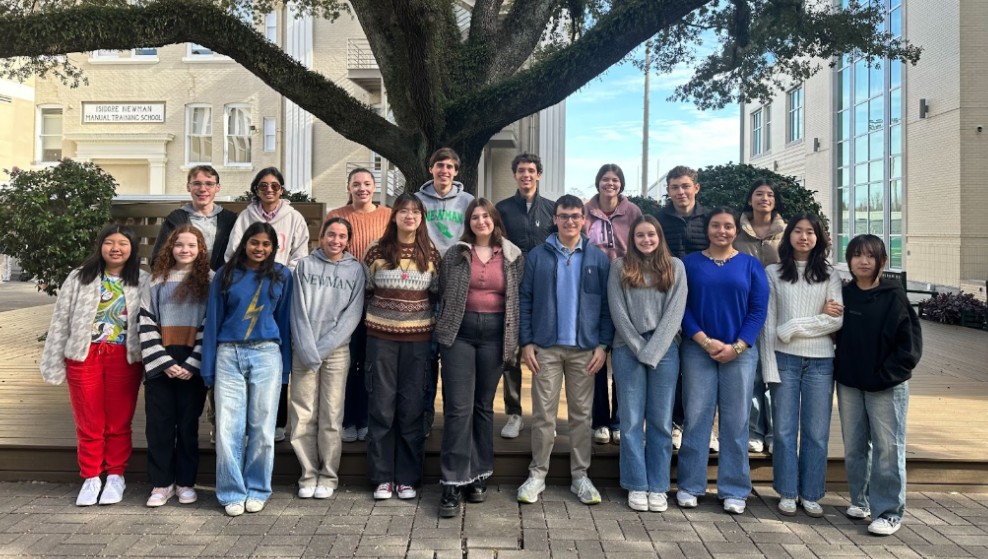
When protest is combined with art, voices are uplifted. At the Choir concert on Thursday, November 14th, the choir sang a medley of songs from Les Misérables in honor of the musical’s 40th anniversary, including “Do You Hear the People Sing?” For the final song of the medley, a reprise of “Do You Heart the People Sing,” Newman Faculty joined in the song. The girls in the Upper School choir joined together in a rendition of “The March (We Demand Equality)” from the musical Suffs.
As the chorus asks whether anyone hears the people sing, voices are ringing clear and rising above the rest from global protest movements to high school stages. These movements are a prescient reminder that self-expression through art, speech, or exercising our collective civic duty to vote remains some of the most powerful voices citizens have. As long as we keep raising our voices, someone will be there to listen.
Read (and Watch) More Here:
https://people.com/army-choir-performs-les-mis-trump-governors-ball-11685730
https://www.youtube.com/watch?v=iEzc3xAE-ag – NSDA POI 2023 National Champion “Can You Hear the Screams Now”
https://www.nytimes.com/2025/11/05/us/politics/nj-governor-takeaways.html
https://www.cbsnews.com/live-updates/election-day-2025-voting-results/